

What Is the EU Forced Labour Regulation (EUFLR)?
Regulation (EU) 2024/3015 prohibits placing or making available products made with forced labor on the EU market, or exporting them from it. It entered into force in December 2024 and becomes enforceable on 14 December 2027.
The ban covers forced labor at any stage of a product's value chain, not only at the final manufacturer step. A violation two tiers upstream counts the same as one at your direct supplier.
The Commission published its implementing guidelines on 26 June 2026. Days later, it opened the Forced Labour Single Portal, hosting the guidelines and SME tools. The Portal will also be the place for of the mandated upcoming risk database of high-risk regions and products. A separate channel for civil society to submit reports opens later, on 14 December 2027, the same day enforcement starts. This channel, known as the Single Information Submission Point, will be the place where anyone, from workers to NGOs to competitors, can report suspected violations.
The European Commission handles cases outside the EU. Member State authorities handle cases inside their own territory, with customs support on both sides.
Member States set the actual fine amounts under Article 37. The Commission's guidelines suggest a five-step method for weighing penalties, with an illustrative range of 0 to 4% of global annual turnover for the most severe cases of non-compliance with the ban. That range is a benchmark for authorities, not a fixed cap in the law.
What Evidence You Need to Have Ready
The guidelines let authorities work from indirect and circumstantial evidence, not only direct proof. They also reference the ILO Indicators of Forced Labour when deciding whether to open a case. Your own evidence trail is the difference between a fast preliminary response and a nine-month investigation.

PRODUCT EVIDENCE
HS and CN codes, batch and serial references, certificates of origin, and traceability records linking a finished product back to its raw materials

SUPPLY CHAIN EVIDENCE
Supplier and sub-supplier lists, tier maps, ownership relationships, facility data, and transactional records such as purchase orders and shipping documents

DUE DILIGENCE RECORDS
Risk assessments, corrective action plans, grievance records, and evidence of engagement with suppliers on the issues you've found

REMEDIATION EVIDENCE
Independent audits, revised contracts, completed corrective actions, and evidence that affected workers received remedy, needed if you want a decision reversed
Where the EUFLR Fits Next to CSDDD and CSRD
Brands often lump these three together. They regulate different things, and only one of them has no size threshold. CSDDD asks you to manage risk in how you run your business. CSRD asks you to report on it. The EU Forced Labour Regulation asks a narrower question about one product at a time. Was forced labor used to make it, anywhere in the chain.
| EUFLR | CSDDD | CSRD | |
|---|---|---|---|
| Applies to | Any company, any size | 5,000+ employees, over €1.5bn turnover | 1,000+ employees, over €450m turnover |
| What it regulates | Products | Company conduct | Reporting |
| Applies from | 14 Dec 2027 | 26 Jul 2029 | From FY2027 |
| Enforcement | Customs, market surveillance, the Commission | Member State supervisory authorities | Auditors, supervisory authorities |
How Retraced Supports Compliance
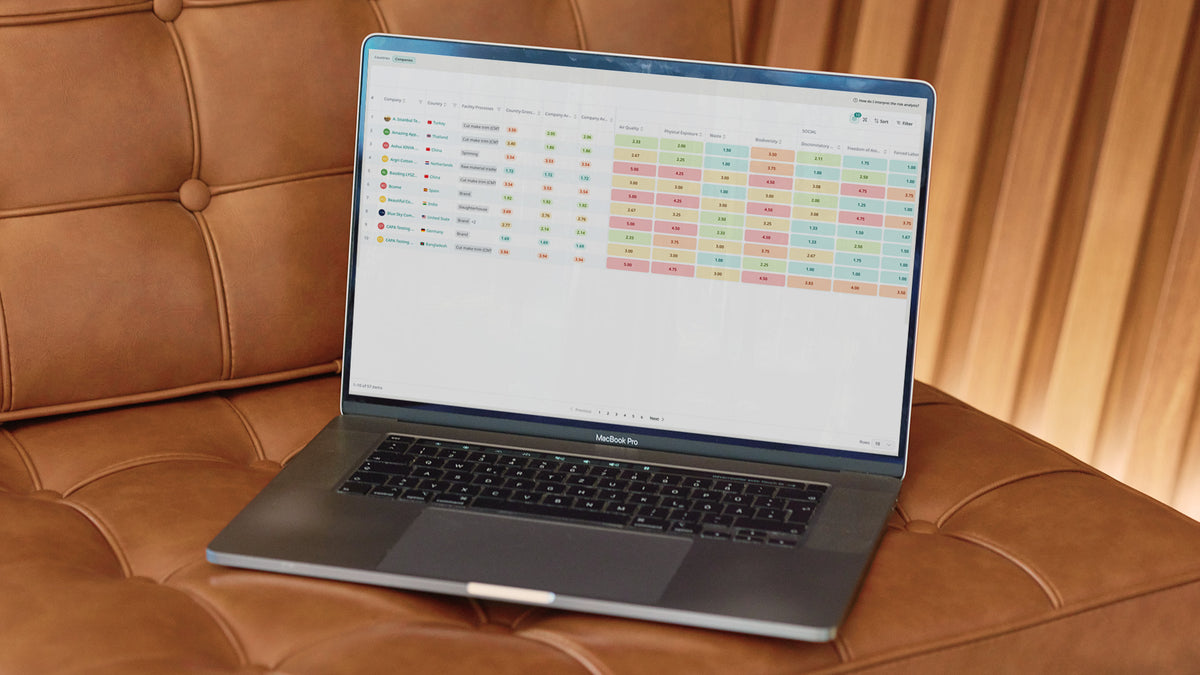
Retraced gives you the evidence backbone an investigation asks for, built before the request ever lands.
- Multi-tier supply chain mapping, so you can trace a product past tier one
- Product and component data linked to bills of materials, ready for HS and CN code lookups
- Risk screening across country-level risk factors, so you can prioritize where forced labor risk is most likely
- CAPA workflows to track and close corrective actions
- Supplier questionnaires, certificates, and documents stored in one place
Retraced keeps the evidence an investigation asks for, because the Forced Labour Regulation runs through investigation rather than filing.
Steps to Get Ready
- Map your supply chain past tier one.
- Run risk assessments on country and product level
- Build a product-level evidence trail before you need it.
- Run due diligence on the suppliers carrying the most risk.
- Write down your internal response process now, not during an investigation.
- Name one person as the point of contact for any request.

SEE YOUR SUPPLY CHAIN THROUGH AN INVESTIGATOR'S EYES
Book a demo to see how Retraced brings your product, supplier, and due diligence data into one place, ready for whatever a forced labor investigation asks for.
Frequently Asked Questions
Authorities ask for two kinds of evidence. Company-level due diligence records, like risk assessments and corrective actions, and product-level records, like certificates of origin and bills of materials linking a product to its raw materials. Retraced keeps the evidence an investigation asks for, because the Forced Labour Regulation runs through investigation rather than filing.
You're notified within 3 working days of a formal investigation opening. From there, you need to submit complete and accurate evidence within 30 to 60 working days. Authorities can request product data, supplier records, and proof of any corrective action you've taken.
It depends on the stage. A preliminary request usually gives you 30 working days. A formal investigation gives you 30 to 60 working days once notified, and the whole process is intended to the extent possible at 9 months.
Yes. The regulation has no threshold for company size, turnover, or sector. The European Commission has published a separate preparedness checklist for small and medium businesses, since the same rules apply to them.
The product gets withdrawn from the market, disposed of, or removed from online listings, with 30 working days to act, or 10 for perishable goods. A brand can get the decision reversed by showing credible evidence that the forced labor has stopped.